Most assessments for bipolar disorder are designed to measure the severity of symptoms. They ask how often you have been depressed, how elevated your mood has been, how much your sleep has been disrupted. These are important measures — but they only capture one dimension of what is actually happening.
The Bipolar IN Order framework uses a different kind of measurement: functionality during states. Not instead of symptom severity, but in addition to it.
Why Functionality Measurement Matters
Consider two people who both experience a depressive episode of similar clinical severity. Person A is bedridden and unable to work or maintain relationships for the duration. Person B experiences the same emotional and physical intensity of depression, but maintains their job, their most important relationships, and their daily basic functioning throughout.
A standard symptom assessment might rate these two episodes similarly. But their outcomes — and what those outcomes mean for quality of life, for employment, for relationships, and for the long-term trajectory of the condition — are dramatically different.
Functionality during states is the measure that captures this difference.
What Functionality Means
Functionality in the Bipolar IN Order framework encompasses six domains, all of which are affected by bipolar states:
Physical — Can you maintain basic self-care, sleep, nutrition, and physical activity during an episode?
Mental — Can you think clearly enough to make reasonable decisions, complete tasks, and engage with work or learning?
Emotional — Can you regulate your emotional responses well enough to maintain relationships and avoid significant collateral damage?
Spiritual — Can you maintain connection to what gives your life meaning and purpose?
Social — Can you sustain your most important relationships through the episode, even if not at full capacity?
Career/Financial — Can you maintain your employment and financial responsibilities, at least at a minimum level?
A fully functional person during a bipolar episode is not someone who is unaffected by the state — they are someone who can continue to operate across most of these domains despite the intensity of the state.
Measuring Intensity and Functionality Together
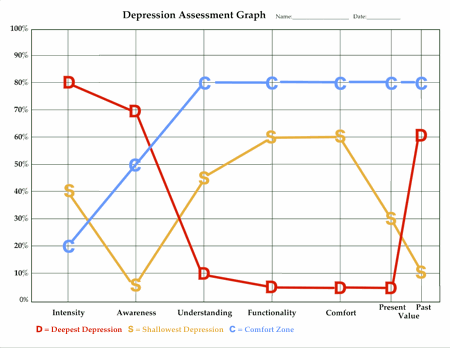
One of the distinctive tools in the Bipolar IN Order approach is plotting intensity against functionality for each domain. This creates a clearer picture of where someone actually is: not just "how bad are the episodes" but "how much do the episodes cost me in actual life capacity."
For most people early in their work with bipolar disorder, functionality drops sharply as intensity increases. As the work progresses, the relationship between intensity and functionality changes — the person learns to maintain greater functionality at higher intensities. This change is measurable and represents genuine progress that symptom assessments alone cannot capture.
Why This Is Relevant for Treatment
Standard outcome measures for bipolar disorder — episode frequency, hospitalization rates, medication adherence — are important but incomplete. They track the absence of crisis rather than the presence of capability.
For insurance companies, employers, and others who care about outcomes, functionality measurements offer a more complete picture. A person who experiences four depressive episodes per year but maintains employment and relationships throughout is in a very different position than someone who experiences the same four episodes and loses their job and significant relationships during each one.
The Bipolar IN Order approach is designed to produce measurable improvement in functionality, not just reduction in symptom severity. Both matter. Measuring both produces a more honest and more useful picture of what treatment is actually accomplishing.