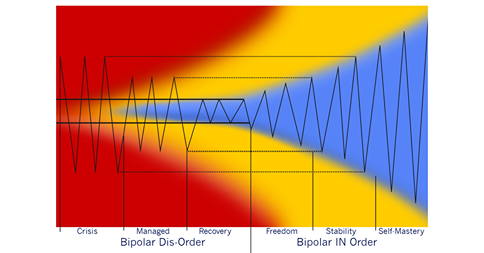
If you have been living with bipolar disorder for any length of time, you have probably had the experience of a period that felt genuinely better — and then watched it erode when the next cycle arrived.
That cycle of progress and erosion is not inevitable. Better and more durable results are possible. But getting them requires understanding what actually produces improvement — and that understanding is often different from what the standard treatment conversation suggests.
What Produces Durable Improvement
Treatment that fits. The most obvious prerequisite, but one that takes more time and iteration than most people expect. Finding the right medication protocol is often a multi-year process of adjustment and refinement. Therapy that genuinely helps — rather than therapy that checks a box — requires finding a relationship that is actually working. Getting this foundation right is worth significant sustained effort.
Skills development, not just symptom management. Symptom management is aimed at reducing the frequency and severity of episodes. Skills development is aimed at what you do within them when they occur. Both are necessary. Many people invest heavily in symptom management and not at all in skills development — and then are unprepared when the symptoms return despite their best management efforts.
Consistent use of what you know works. One of the most consistent patterns in conversations with people who have struggled with bipolar disorder is the knowledge — often quite detailed — of what helps, combined with inconsistent application of that knowledge. During difficult periods, the very tools that would help most are often abandoned because they feel like too much effort. Building routines around your most effective tools during stable periods — so they are habits rather than effortful decisions — makes them more likely to be available when needed.
Honest self-assessment. Better results require knowing honestly where you are. This includes being honest with your treatment team, honest with your support people, and honest with yourself about when things are getting harder rather than maintaining a performance of wellness. The people who tend to get the best results are unusually willing to look clearly at their own patterns, including the ones that are uncomfortable to acknowledge.
Patience with the timeline. Durable improvement in bipolar disorder comes slowly, built through sustained effort over time. The expectation that a new medication, a new therapy, or a new approach will produce quick and permanent change is usually disappointed. The expectation that sustained work over years will produce genuinely better results is typically confirmed. Adjusting the timeline is part of getting better results.
What Better Results Feel Like
Better results with bipolar disorder do not always look like what people expect. They often do not mean fewer episodes, at least not at first. They may not mean feeling better in the obvious sense.
What they tend to mean, in the early stages, is greater predictability. Understanding your patterns well enough that cycles feel less like ambushes and more like known territory. And within that predictability, greater capacity — the ability to maintain more of what matters during difficult periods than was possible before.
Over time, and with sustained work, better results can come to mean something considerably more expansive: a genuine shift in what the condition costs, in how much fear it generates, and in what kind of life is available within it.
That more expansive version is real. It takes time. And it starts with each small, consistent improvement in what you understand, what you practice, and what you show up for — even when it is hard.