Bipolar IN Order
Bipolar IN Order is a self-management program for bipolar disorder. It helps people notice their states earlier, understand how their environment shapes them, and take ownership of their behaviors, including which tools to use and when. They respond before things escalate. The result is fewer crises, better day-to-day functioning, and real self-management.
Learn How It Works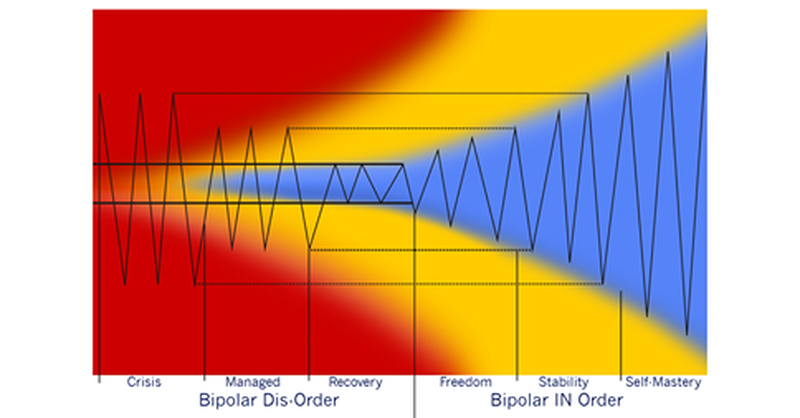
The Approach
Users build personalized profiles of their environments, behaviors, comfort zones, and tools — creating a self-management system specific to them. The program works alongside clinical care, not as a replacement for medication or therapy.
Almost everything in the program is paired. Mania and depression have separate tool selections, environment ratings, timeline settings, and comfort zone thresholds. This reflects that bipolar symptoms are directional — what helps during depression may not help during mania, and vice versa.
"Bipolar In Order provides the essential message that symptom reduction or elimination is far from the main goal of adaptation and intervention. Sure to challenge traditional thinking, this important work is integrative and wise."
— Stephen P. Henshaw, PhD, Professor and Chair, Dept of Psychology, UC Berkeley
What's in the Program
Structured Education
Self-paced video lessons that build awareness step by step. Features unlock as users progress through the program's lessons — starting with daily check-ins, then opening up tools, reports, and the timeline system. This keeps the experience from being overwhelming early on and ensures users understand each feature before they get access to it.
Daily Check-ins
A 30-second daily check-in captures mood state, environment, behavior, and tool usage. Over time, this builds the dataset that drives reports and pattern recognition.
Graduated Timelines
When check-in data shows a trend outside the comfort zone, the program walks the user through a stepped response — starting with awareness, progressing to stronger tools when needed.
AI Coaching
AI-assisted reflection that reinforces self-awareness and helps users recognize patterns. Explicitly scoped to coaching — not clinical advice.
Reports You Can Share
The app generates reports that show users how they're doing over time — mood trends, which tools are working, behavioral patterns, and AI-generated insights. Users see their own data. Partners see aggregate outcomes across their cohort — engagement, cost savings, tool effectiveness — but never individual check-in data or conversations.
You Control Who Sees What
Users can share their check-in data, tool usage, AI coaching conversations, and reports with therapists, doctors, family, or researchers — choosing exactly what each person can and cannot see. A therapist might get the clinical report and tools data. A spouse might see only the weekly summary. The user decides, and can revoke access at any time. All access is logged for HIPAA compliance.
What People Are Saying
"I felt authenticated. I learned so much about how I am not alone in the world of depression. I gained a sense of clarity in terms of how to live with depression. Tom Wootton is completely effective, and someone who understands these states intimately."
— Karen R.
23 Years of Development

Bipolar IN Order has been in continuous development since 2003. What started as in-person workshops has been refined into a fully digital, standardized program. Studied at Tufts University. Reviewed by PCORI. Endorsed by researchers at Yale, UC Berkeley, Maastricht University, and the University of Barcelona.
In continuous use since 2003 — from in-person workshops to the current digital platform. Now scaling through clinical partnerships and institutional pilots.
See the Evidence