How the Program Works
Bipolar IN Order treats mania and depression as states to be understood and navigated. Users build personalized profiles of their environments, behaviors, comfort zones, and tools — creating a self-management system specific to them. The program works alongside clinical care, not as a replacement for medication or therapy.
You Start With Lessons
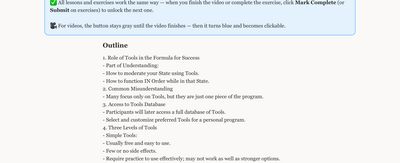
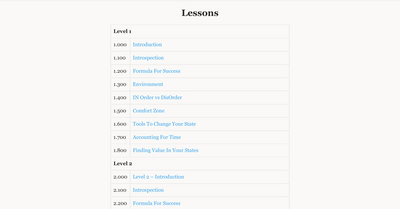
Lessons are sequential educational content — video and reading, numbered 1.0 through 8.8. Exercises are interactive forms embedded within lessons that require your input before advancing.
The exercises build your personal profile: you rate environments for how they affect your mania and depression separately, identify behaviors you notice during each mood state, set your comfort zone thresholds, select your tools, and configure your timeline settings. This is where the program becomes yours — not a generic worksheet, but a system built around how you actually experience your states.
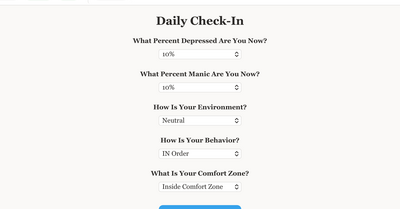
Daily Check-ins Keep You Connected
A daily check-in takes about 30 seconds and captures where you are right now — mania, depression, what's going on around you, and how you're handling it. Over time that builds a detailed personal dataset that drives the AI coaching, reports, and pattern recognition.
When you use a tool, the program tracks what worked and in what context. Monthly surveys capture healthcare utilization — hospitalizations, ER visits, medication changes — which feed the cost savings analysis.
Everything Is Paired — Mania and Depression Separately
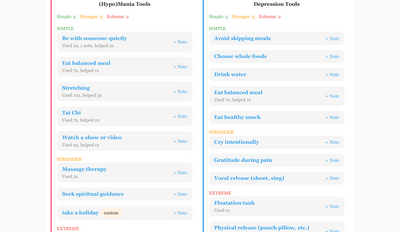
Almost everything in the program is paired. Mania and depression have separate tool selections, environment ratings, timeline settings, and comfort zone thresholds. This reflects that bipolar symptoms are directional — what helps during depression may not help during mania, and vice versa.
Features Unlock as You Go
Features unlock as you progress through the program's lessons — starting with daily check-ins, then opening up tools and reports, then the timeline and full program. This keeps the experience from being overwhelming early on and ensures you understand each feature before you get access to it.
The Timeline Responds When Things Escalate
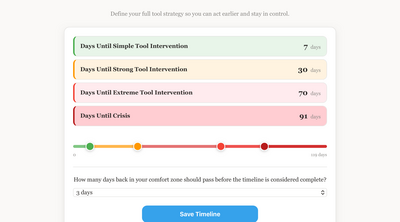
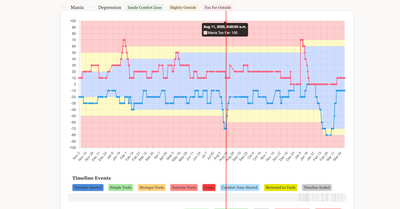
When your check-in data shows you're moving outside your comfort zone, the program starts a timeline — a graduated sequence of responses that begins with simple awareness and progresses through stronger tools only if things continue to escalate. Each mood direction runs its own independent timeline, and you control how many days at each phase before it advances.
The phases move from observation to simple tools, then stronger tools, extreme tools, and crisis-level response. It's a structured response instead of a reactive one.
AI Coaching Throughout
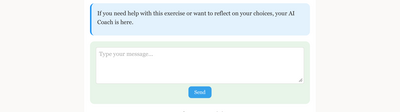
The AI coach appears throughout the app — in lessons, exercises, tools, and reports. It provides conversational coaching by asking targeted questions based on your data, helping you develop self-awareness and recognize patterns. It is not a therapist and does not provide therapeutic advice — it builds insight between sessions, not just during them.
Track Progress and Share It
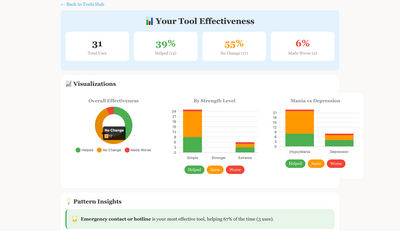
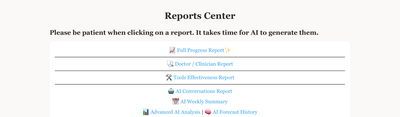
The app generates reports that show you how you're doing over time — mood trends, which tools are working, behavioral patterns, and AI-generated insights.
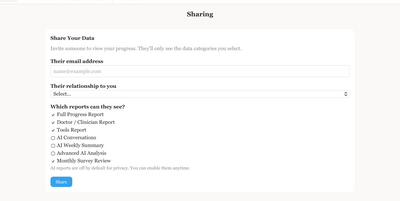
You can share your check-in data, tool usage, AI coaching conversations, and reports with therapists, doctors, family, or researchers — choosing exactly what each person can and cannot see. A therapist might get the clinical report and tools data. A spouse might see only the weekly summary. You decide, and can revoke access at any time. All access is logged for HIPAA compliance.
The Stages of Progress
As you work through the program, you progress through measurable stages — from Managed to Freedom to Stability to Self-Mastery. Each stage is assessed across dimensions like intensity, awareness, understanding, functionality, and comfort.
Ready to Start?
Helping people improve their lives since 2003.
Join the Program