Depression and bipolar disorder are related but distinct experiences, and the relationship between them is more nuanced than the standard clinical definitions suggest.
Understanding this relationship more deeply — what each actually involves, how they interact, and what distinguishes them — is the beginning of a more informed approach to working with either condition.
Depression as Part of Bipolar
For many people with bipolar disorder, depression is the dominant experience. Manic and hypomanic states may be less frequent or less remembered, but the depressive episodes are longer, more debilitating, and more central to the experience of the condition.
This matters clinically: bipolar depression requires different treatment approaches than unipolar depression. Antidepressants used without mood stabilizers can trigger manic episodes or rapid cycling in some people with bipolar disorder. The treatment of bipolar depression is a specialized area, and getting it right often requires working with a clinician who understands the distinction.
It also matters personally: understanding your depressive episodes as part of a bipolar pattern — with implications for what comes before, during, and after them — is different from understanding them as standalone episodes of depression. The pattern matters. The triggers and transitions matter. The relationship between your depressive and elevated states matters.
What Depression Actually Is
Depression is not simply sadness. It is a state that affects multiple dimensions of experience simultaneously.
Physically, it often involves changes in sleep, appetite, energy, and the experience of the body. Everything can feel heavier and slower.
Mentally, it typically involves difficulty with concentration, memory, and decision-making. Thinking may feel like wading through something thick.
Emotionally, it may involve sadness, but also numbness, irritability, emptiness, or a flatness that is harder to describe than pure sadness.
Spiritually — in the sense of connection to meaning and purpose — depression often produces a dimming of what normally makes life feel worthwhile.
Socially, depression typically produces withdrawal — not always because the person does not want connection, but because the energy required for genuine engagement is not available.
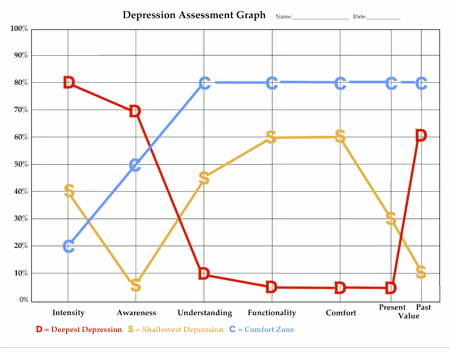
Understanding which of these dimensions are most affected during your depressive episodes is genuinely useful clinical information. It helps you and your treatment team target interventions more specifically.
What Bipolar Disorder Actually Is
Beyond the standard definition — a condition involving episodes of both depression and elevated mood — bipolar disorder is better understood as a condition that involves the full range of human emotional and energetic experience at intensities and in patterns that differ from the norm.
The Bipolar IN Order framework describes it as existing on a spectrum: from crisis and disorder at one end, through managed and recovery stages, to freedom, stability, and self-mastery at the other. Where someone is on that spectrum at any given time is not fixed by diagnosis — it is partly a function of the work they have done, the support they have received, and the skills they have built.
This understanding does not minimize the clinical seriousness of the condition. It expands the range of what is possible within it.
The Relationship Between Understanding and Outcome
One of the most consistent findings in the Bipolar IN Order program's experience is that people who understand their condition more deeply tend to manage it better over time. Not because understanding alone resolves the clinical challenges, but because understanding enables more targeted use of clinical tools, better communication with treatment providers, and greater ability to recognize and respond to warning signs early.
A deeper understanding of depression and bipolar disorder is not a luxury. It is part of the work.